
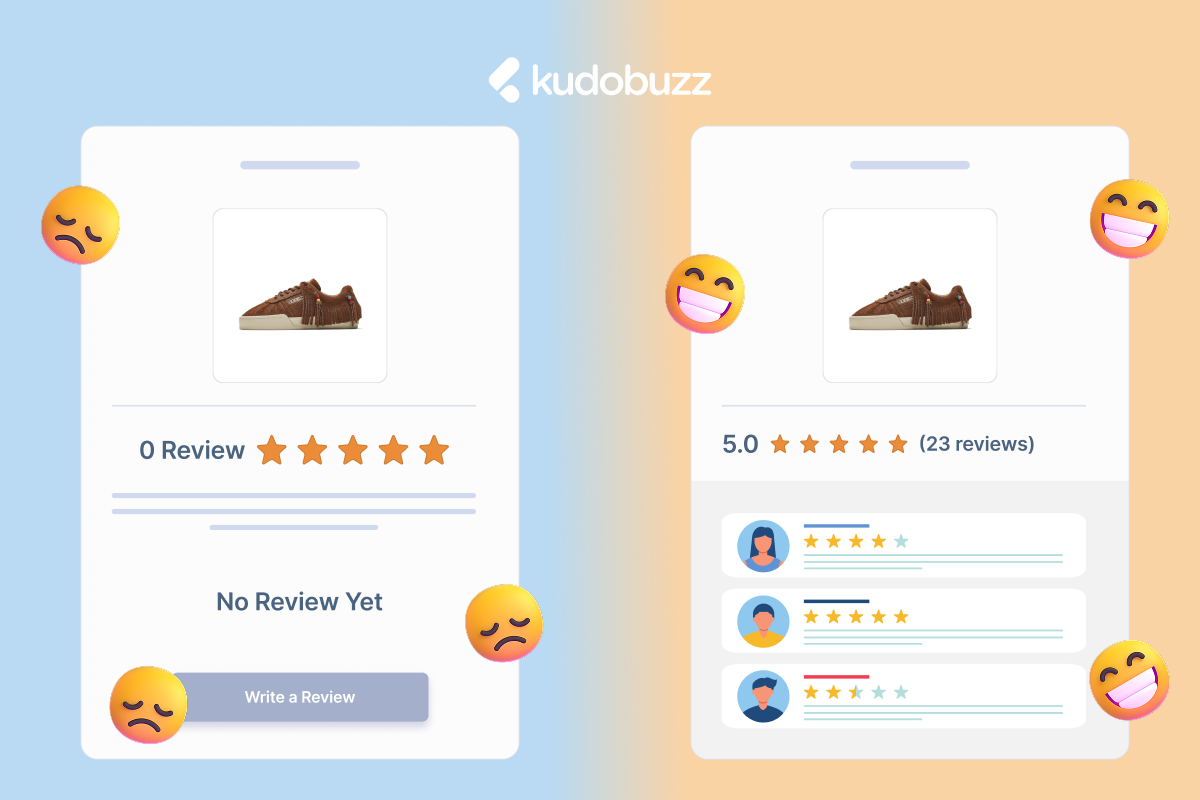
You've launched your store and everything looks perfect. Your product photos are professional, your pricing is competitive, and your shipping is fast. But shoppers still bounce after 10 seconds on your product pages. The reason? Zero reviews. No social proof means no trust, and no trust means no sales.
This is the cold-start problem every new store faces. You're stuck in a frustrating catch-22 where you need sales to get reviews, but you need reviews to get sales. Customers land on your beautifully designed product page, scroll down expecting to see what other buyers thought, and find nothing. They leave and buy from a competitor who has reviews, even if that competitor's product is worse than yours.
Getting those first reviews feels impossible when you're starting from scratch, but the good news is that getting your first 10 reviews is doable within 2-3 weeks if you're proactive about it. This article will show you exactly how with 5 practical tactics you can implement starting today.
Why the First 10 Reviews Matter Most
Zero reviews don't just make your store look new, they make it look risky. Shoppers assume stores without reviews are unproven, potentially unreliable, or might not deliver orders at all. When they see a competitor with even just 5-10 reviews, they choose the safer option every time.
Ten reviews is the magic number where perception shifts. Once you cross that threshold, your store looks legitimate instead of brand new, and ten reviews proves that real customers bought from you, received their orders, and cared enough to leave feedback. It's enough social proof to overcome the initial skepticism new stores face.
Ten reviews also stabilizes your average rating. With only one or two reviews, a single bad review tanks your rating to 2 or 3 stars, but with ten reviews, one negative review barely moves the needle and your rating stays strong. There's also an SEO benefit because star ratings start appearing in Google search results once you have enough reviews with proper schema markup, and those orange stars in search results dramatically increase click-through rates.
The compounding effect is the real payoff. Once you hit 10 reviews, getting more becomes significantly easier because new customers trust you enough to buy, and some percentage of those buyers leave reviews naturally. The first 10 are the hardest but most important reviews you'll ever collect.
Tactic #1: Import Existing Reviews from Other Platforms
This is the fastest way to solve your cold-start problem if you have reviews sitting on other platforms. Many new store owners don't realize they're already sitting on valuable social proof that just needs to be moved to where shoppers can see it. You can import reviews from Google Business Profile if you have a physical location, Amazon reviews if you sold the same products there before, Etsy or eBay marketplace reviews, AliExpress reviews if you're dropshipping, Facebook page reviews, or old website reviews from a previous platform.
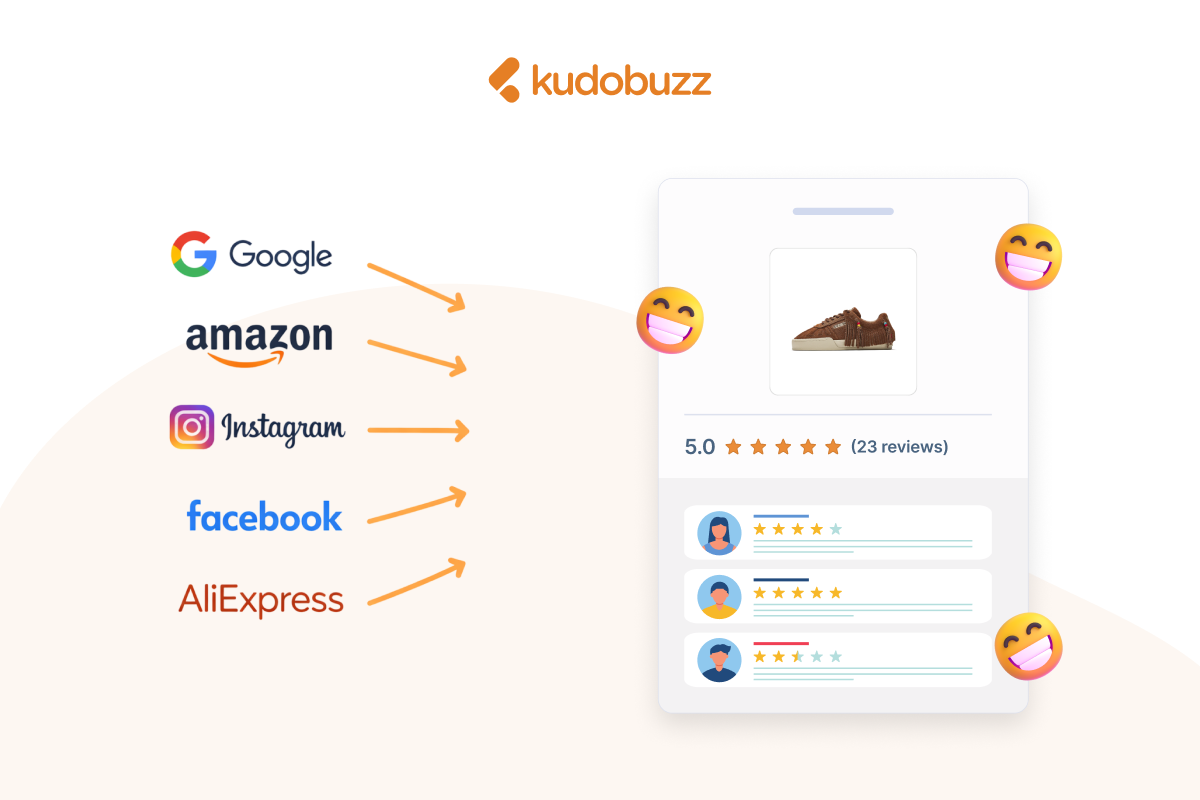
Most review apps including Kudobuzz let you import reviews with one click or via CSV upload. The app pulls in the review text, star rating, customer name, and date, then displays them on your product pages exactly as if they were left directly on your store. The entire process takes less than 5 minutes for 50+ reviews. This works because you're not faking reviews, you're moving legitimate social proof from where it's hidden to where it's useful. Shoppers don't care whether a review was originally left on Amazon or your store, they just care that real people vouched for the product.
The important rule here is to only import reviews for the exact same product you're selling. Don't import reviews for a different product or variant and try to pass them off as relevant. If you sold blue running shoes on Amazon and now you're selling the same blue running shoes on your store, importing those reviews is completely legitimate.
Kudobuzz specifically supports one-click imports from Google, Amazon, AliExpress, and CSV files. If you have reviews scattered across multiple platforms, you can import from all of them and consolidate everything in one place.
Tactic #2: Reach Out to Your First Customers Personally
Your first 10-20 customers are special because they took a risk on an unproven store when they had no social proof to rely on. Because they trusted you first, they're often more willing to help if you ask personally. Wait 7-10 days after they receive their order so they've had time to use the product, then send a personal email that you actually write yourself. Thank them for being an early customer, acknowledge that you're a new store trying to build credibility, and ask if they'd be willing to share their experience in a review.
Here's an example: "Hi [Name], I wanted to personally thank you for being one of our first customers. Your order was delivered last week and I hope you're enjoying [product]. If you have a minute, would you mind leaving a quick review? It would really help us get off the ground as a new store. Here's the link: [review link]. Thanks so much for supporting us!"
Response rates for personal outreach are dramatically higher than automated emails, typically 15-20% compared to 3-5% for generic automated requests. Don't copy-paste the exact same message to everyone — personalize it slightly by mentioning their specific product or referencing their order.
Keep the tone light and genuine. Don't beg or guilt-trip. If someone doesn't respond, that's completely fine. Once you have 10+ reviews, switch to automated review request emails instead of personal outreach because personal emails don't scale beyond your first batch of customers.
Tactic #3: Set Up Automated Follow-Up Emails
Most store owners send one review request email and wonder why nobody responds. The reality is that most customers aren't ignoring you, they're just busy, and a gentle reminder dramatically increases response rates.
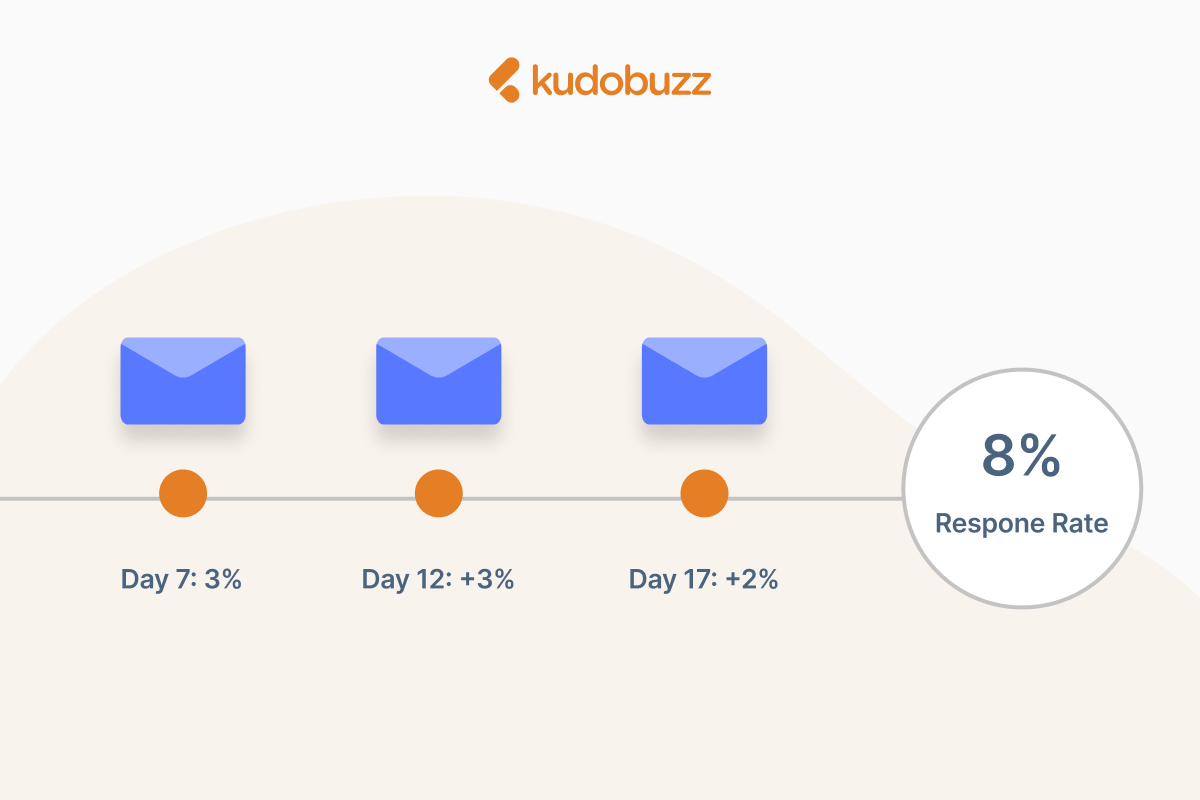
You should send at least three emails in a sequence. The first email goes out 7 days after delivery with a subject line like "How's your [product name]?" and a simple message asking how they're enjoying the product. The second email goes out 5 days later if they haven't responded, with a subject line like "Quick favor?" and a brief reminder that you'd appreciate their feedback. The third email goes out 5 days after that with a final gentle reminder.
Response rates jump significantly with this approach. One email typically gets a 3% response rate while three emails get 8-10%. That difference matters enormously when you're trying to collect your first batch of reviews. The huge advantage here is that you can automate this entire sequence. Set it up once in your review app and every customer automatically gets these three emails after their order is delivered. Kudobuzz and other review apps support multi-email sequences with customizable timing. You configure it once and it runs forever without any additional effort.
Stop after three emails. If a customer hasn't responded after three requests over two weeks, they're not going to respond. Three emails is persistent without being obnoxious.
Tactic #4: Offer a Small Incentive for Honest Reviews
Incentivizing reviews is allowed and effective if you do it correctly. The key is offering a reward for any honest review, not just positive ones. Acceptable incentives include a discount on the next purchase for leaving any review, regardless of rating, entry into a monthly giveaway for reviewers, loyalty points for leaving feedback, or free shipping on the next order. What's absolutely not allowed is paying only for 5-star reviews, offering refunds in exchange for positive reviews, or bribing customers to change negative reviews.
Include a clear note in your review request email that says something like: "Leave a review and get 10% off your next order. We value all honest feedback, whether it's 1 star or 5 stars." The critical phrase is "all honest feedback" because it signals you're not trying to buy positive reviews, you're rewarding participation.
This approach increases response rates from 3-5% up to 8-12%. Platform rules generally support this approach—Shopify, Wix, and BigCommerce all allow incentivized reviews as long as you're not manipulating ratings, and Google's policy explicitly states that incentives are fine but reviews must be honest.
Track the ROI to understand if the incentive is worth the cost. If you give a 10% discount to 10 reviewers and they each spend $50 on their next order, you've "spent" $50 in discounts to gain 10 reviews. That's $5 per review, which is incredibly cheap compared to the value those reviews create since studies consistently show that adding reviews increases conversion rates by 15-35%.
Tactic #5: Use Post-Purchase Inserts with QR Codes
If you're shipping physical products, you have a valuable opportunity to ask for reviews right when customers receive their order and excitement is highest. Include a simple insert in every package with a QR code that links directly to your review page. The insert should be small, about business card size, with a clean design, a large QR code, and a short message like "Loved your order? Scan to leave a review!"
This works because customers have the product in hand and they're experiencing peak satisfaction from receiving their purchase. The unboxing moment is when positive emotions are strongest, and scanning a QR code takes only 10 seconds. Response rates for QR code inserts are often higher than email requests because you're catching customers at exactly the right psychological moment.
Keep the design minimal and professional. Use your brand colors, include your logo, make the QR code large enough to scan easily, and keep the text brief. If you're offering an incentive for reviews, mention it on the insert: "Scan to review and get 10% off your next purchase."
Make sure the QR code links directly to your review submission page, not your homepage or a generic contact form. The fewer clicks required after scanning, the higher your completion rate. Test the QR code yourself on multiple devices before printing hundreds of cards.
Getting Your First 10 Reviews Starts Today
Getting your first 10 reviews is the hardest part of building social proof for your store, but it's absolutely achievable within 2-3 weeks if you're proactive. You don't need to wait months hoping reviews will appear naturally.
The five tactics covered in this article give you a clear action plan. Start by importing existing reviews from other platforms if you have them because that solves your cold-start problem in 5 minutes. Reach out personally to your first 10-20 customers with genuine requests acknowledging they're early supporters. Set up automated 3-email follow-up sequences so every future customer gets consistent review requests without manual effort. Offer small incentives like 10% off for honest reviews to boost participation rates. Include QR code inserts in your packages to catch customers at the peak of their unboxing excitement.
The key insight is that you need to be proactive. Reviews won't happen naturally when you're a new store with limited sales. You need to actively ask for them, make the process easy, and follow up consistently.
Pick 2-3 tactics from this article and implement them this week. If you're just launching, start with imports and personal outreach. If you already have a few sales, add automated emails and package inserts. The sooner you get your first 10 reviews, the sooner your conversion rate improves and sales become easier.
If you're using Kudobuzz, review imports and automated email sequences are built in and ready to use. You can import reviews from Google, Amazon, Etzy, or AliExpress in minutes, then set up your email follow-up sequence once and let it run automatically for every customer.
Your first 10 reviews are closer than you think. Pick your tactics, take action this week, and watch your social proof start building.